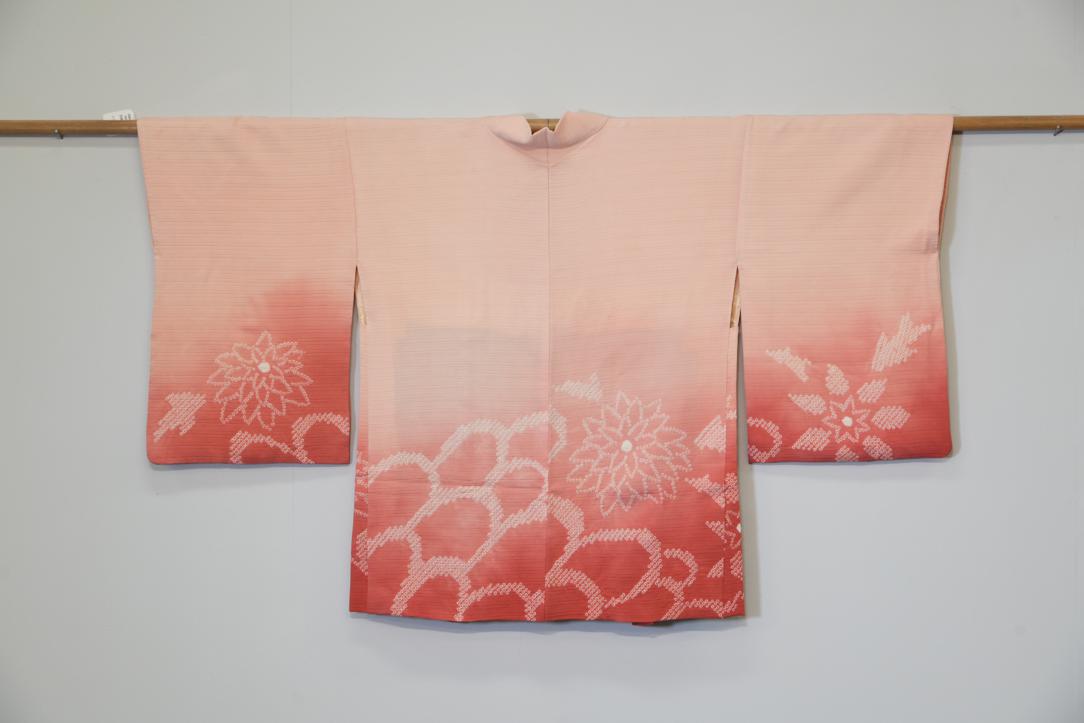
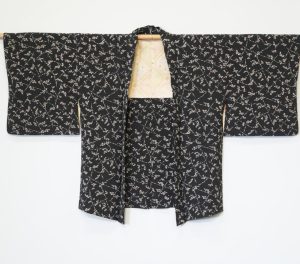
Blush Fade Vintage Japanese Haori Jacket
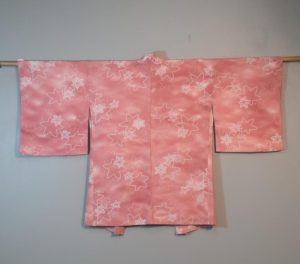
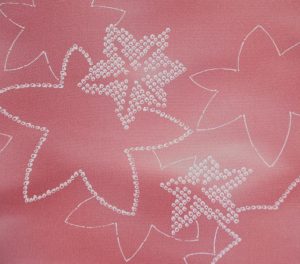
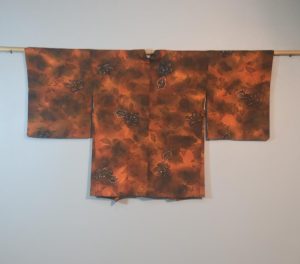
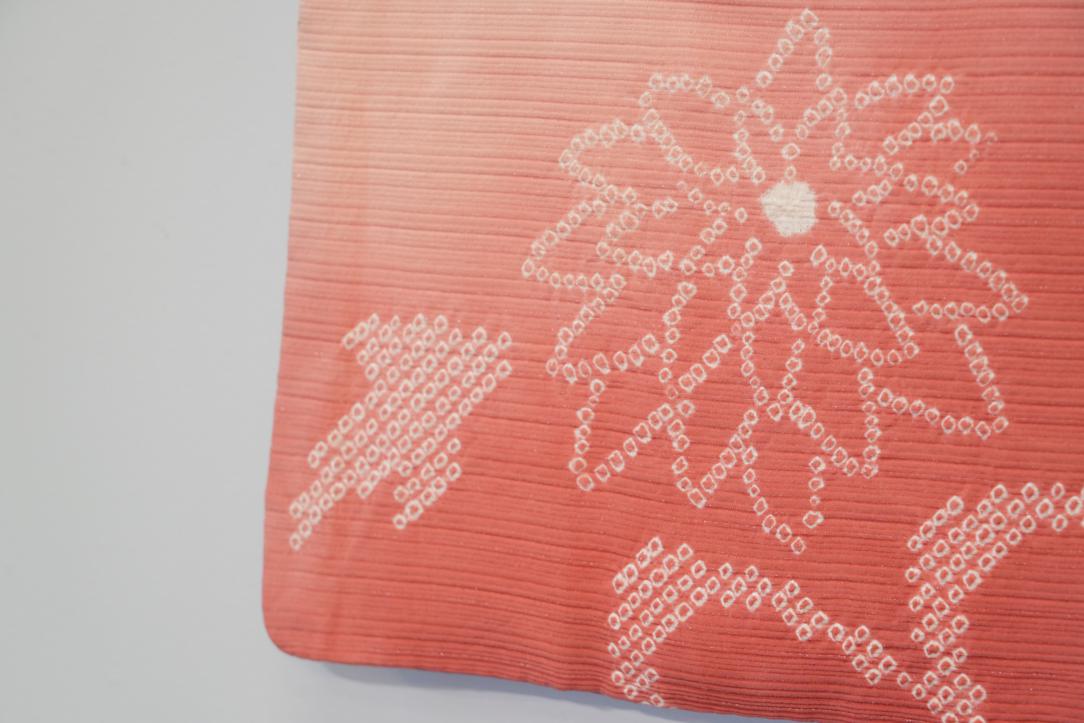
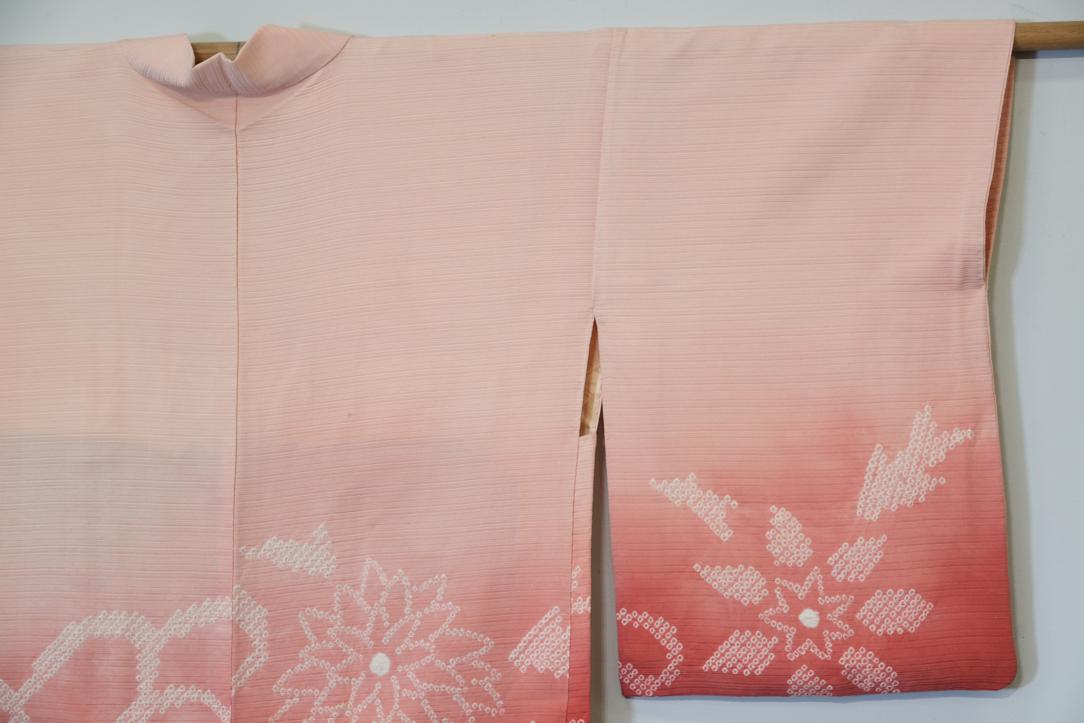
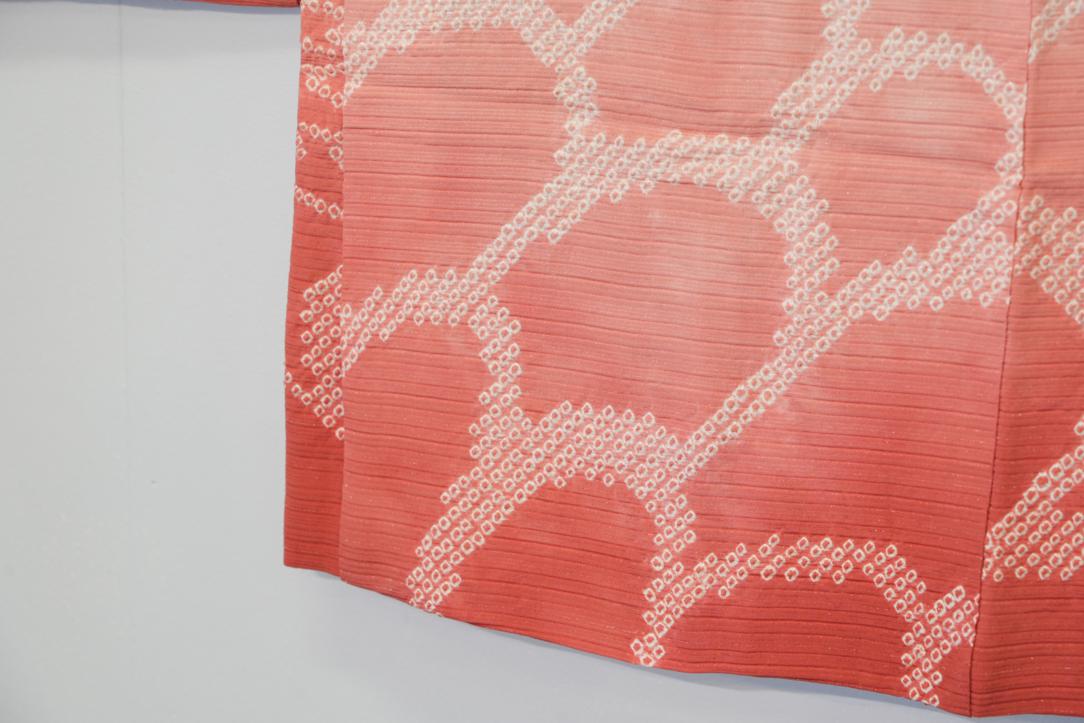
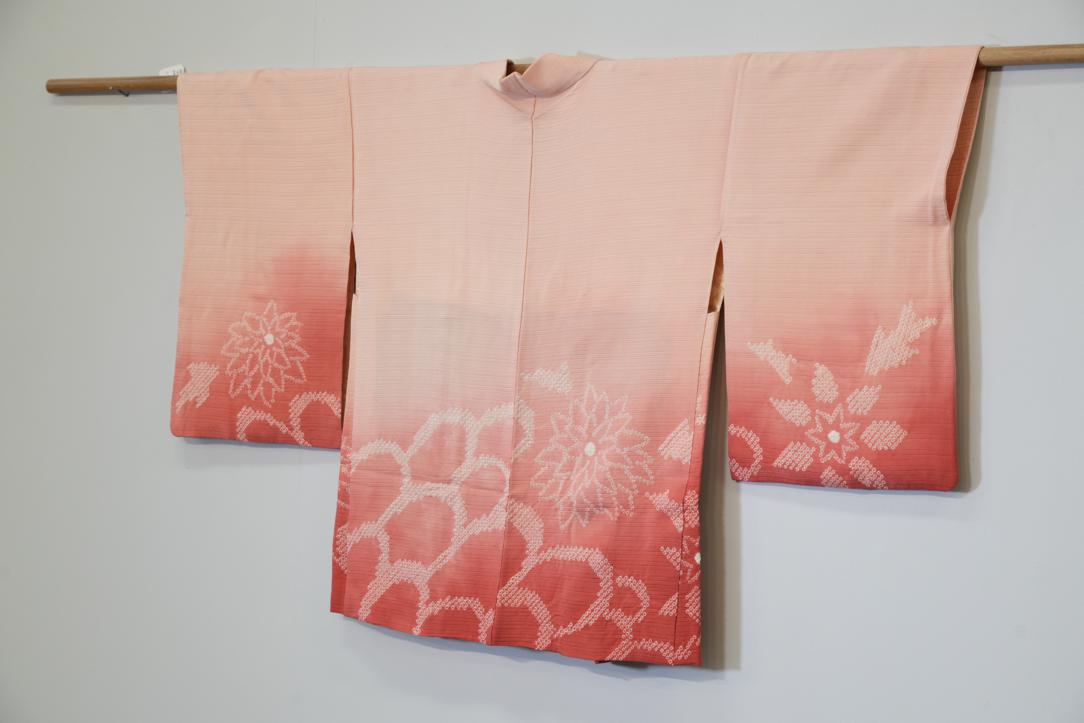
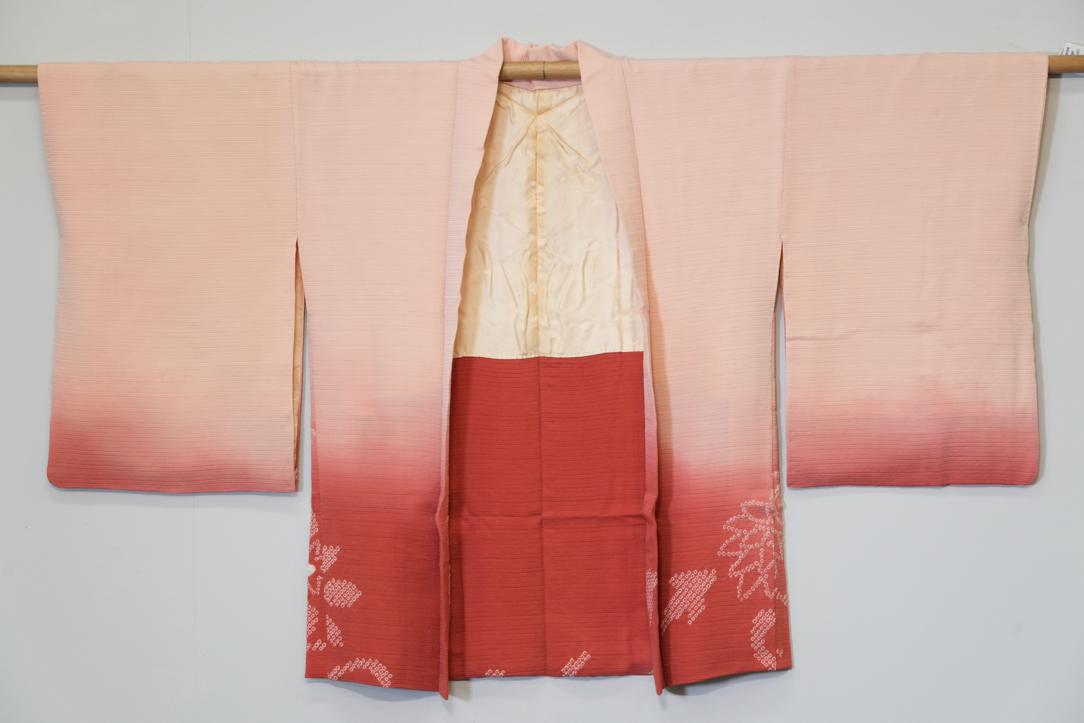
A graceful vintage Japanese haori in soft blush pink, deepening to warm coral red along the lower section and sleeves. Delicate white shibori-style decoration forms chrysanthemums, foliage and flowing cloud-like motifs across the hem. The finely textured fabric and gentle graduated colour create an elegant, feminine appearance. A beautiful statement jacket to wear or display as Japanese textile art. There are some very small marks.
The size is 1210 mm’s across and 750 mm’s long.
In good condition.
And would fit between a size 10 and 16.
Buy any 2 textiles and get FREE postage.
Long valued for both practicality and elegance, the Haori’s origins can be traced to the Edo Period, (1603–1868), when Haori were primarily worn by Samurai. At that tim an extra layer of warmth and protection was provided, while a formal appearance was maintained.
As Japan evolved the use of Haori gradually expanded beyond the warrior class. During the Meiji Period, (1868–1912), significant social and cultural changes were experienced throughout the country. As a result, traditional garments became more widely worn by merchants, craftsmen, and townspeople. Consequently, the Haori began to take on a more decorative role.
Fabric and Design
Fine silk was often selected for the production of Haori jackets. In addition, many were adorned with symbolic and seasonal designs. Motifs such as cranes, maple leaves, waves, and geometric patterns were frequently featured. These designs reflected both nature and the refined aesthetics of Japanese culture. Furthermore, skilled textile artisans employed dyeing and weaving techniques that had been perfected over many generations.
Traditionally, the Haori is worn open and secured with a cord known as a Haori-himo. This simple fastening gently connects the front panels while preserving the garment’s graceful silhouette.
By the Taishō Period (1912–1926) and early Shōwa Period, the Haori had become a fashionable and widely accepted outer garment. Today, vintage examples are admired around the world. Their fine silk, detailed craftsmanship, and timeless appeal continue to attract collectors and enthusiasts alike.